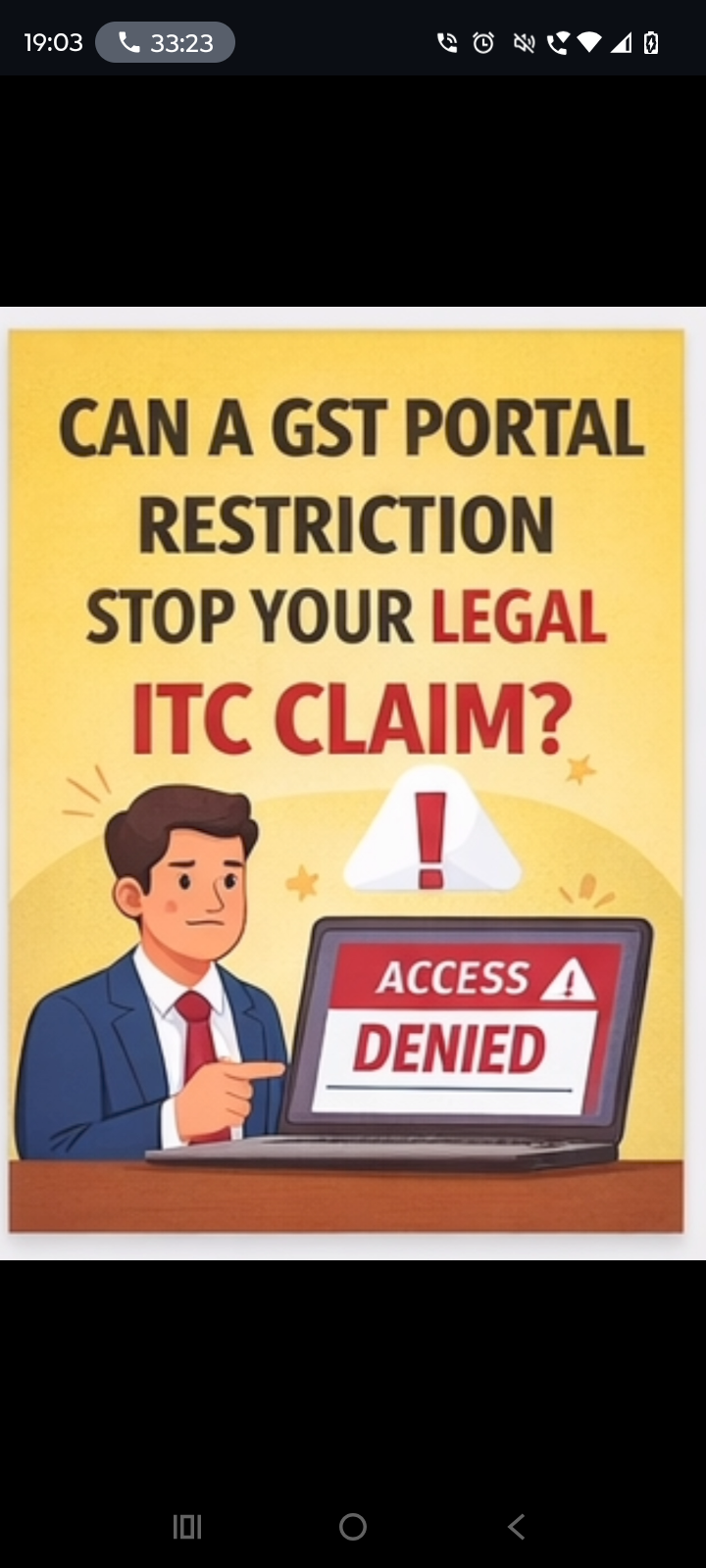
The Gujarat High Court has upheld the constitutional validity of Section 16(2)(c) of the CGST Act, ruling that Input Tax Credit (ITC) can be denied to purchasers if their suppliers fail to deposit tax, even if the purchasers are bona fide. The case involved Maruti Enterprise and others who argued against the denial of ITC due to their suppliers' non-compliance, despite fulfilling all other conditions such as possessing invoices and receiving goods.
The petitioners contended that the burden of compliance was unfairly shifted onto them, as they had no control over the suppliers’ actions. However, the court emphasized that ITC is a conditional statutory benefit, contingent on the actual payment of tax to the government. It is not an absolute right, and the provision acts as a safeguard within the GST framework, ensuring that ITC is linked to taxes actually paid.
The court dismissed the argument that the requirement was impossible to meet, highlighting that the GST system is self-policing, requiring each participant to ensure compliance by their suppliers. It noted that the GST system, unlike VAT, is a destination-based tax regime, and allowing ITC without actual tax payment would disrupt fiscal balance between states.
Read More: Calcutta High Court: False declaration in e-way bill and improper documentation can attract penalty under Section 129, even without proving intent, and state authorities have jurisdiction in transit goods through their territory [Order attached]
The court also pointed out that mechanisms exist for purchasers to reclaim ITC once the supplier pays the tax, indicating that the denial is not arbitrary but a temporary measure consistent with the statutory scheme. Thus, the provision was deemed neither ultra vires nor violative of constitutional rights.
Order Date - 01 May 2026
Parties: Maruti Enterprise (through partner Jigneshbhai Bharatbhai Tarpara) & others Vs Union of India & Others
Facts -
- Maruti Enterprise, along with several petitioners, challenged Section 16(2)(c) of the CGST Act, arguing that they were denied ITC solely because their suppliers failed to deposit tax with the Government.
- The petitioners claimed they had fulfilled all conditions like possessing invoices, receiving goods, and reflecting transactions in GSTR-2A/2B, making them genuine purchasers.
- However, due to supplier default in filing GSTR-3B or paying tax, authorities denied ITC, shifting the burden onto purchasers.
- Multiple petitions were clubbed together as they raised a common constitutional challenge to the validity of Section 16(2)(c).
Issue -
- Whether Section 16(2)(c) of the CGST Act is unconstitutional for denying ITC to bona fide purchasers due to supplier’s failure to deposit tax?
Order -
- The Court held that Input Tax Credit is not an absolute right but a conditional statutory benefit, dependent on fulfillment of all conditions under Section 16, including actual payment of tax to the Government. It emphasized that ITC is intrinsically linked to “taxes paid” and cannot exist independently of actual tax remittance, making Section 16(2)(c) a core safeguard of the GST structure.
- The Court rejected the argument of impossibility, stating that GST is a self-policing system, where each participant in the supply chain must ensure compliance of the previous party. The law intentionally places responsibility on purchasers to transact cautiously, and hardship or inconvenience cannot invalidate a clear statutory condition.
- It distinguished earlier VAT judgments (like On Quest and Arise India), observing that GST is a destination-based tax system with inter-state credit flow, unlike VAT. Allowing ITC without actual tax payment would cause revenue loss and imbalance between states, making Section 16(2)(c) essential for fiscal stability.
- The Court noted that a mechanism exists to re-avail ITC once the supplier pays tax, ensuring no permanent loss to the purchaser. Therefore, denial of ITC is not arbitrary but a temporary consequence aligned with the statutory scheme, and hence the provision is neither ultra vires nor violative of constitutional rights.