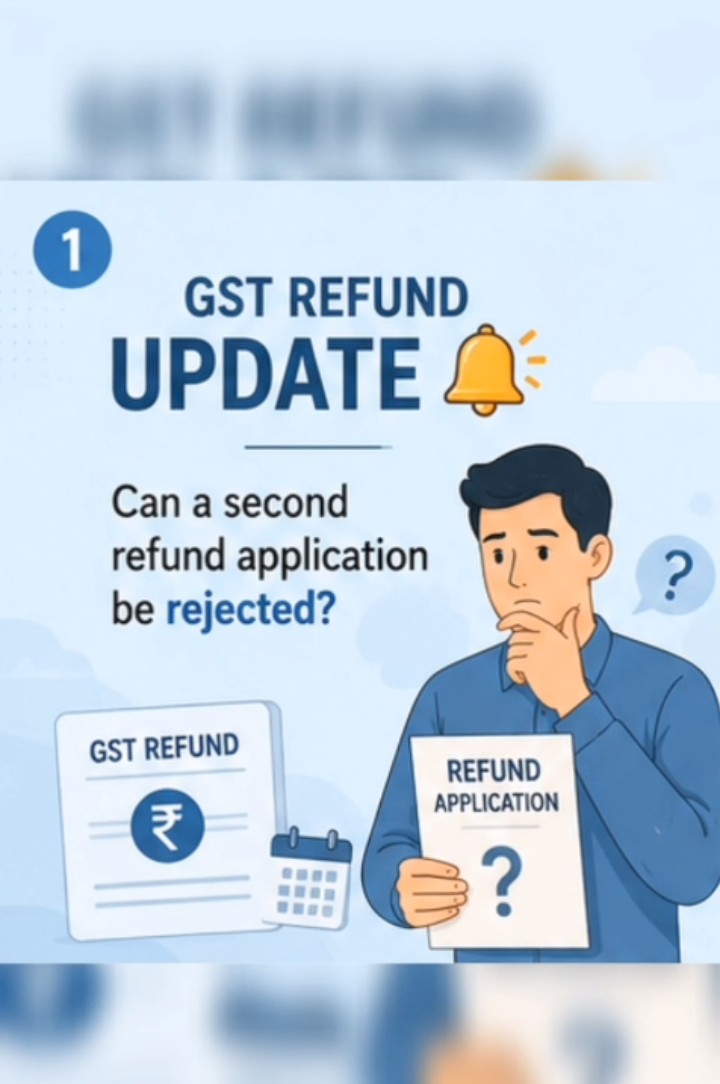
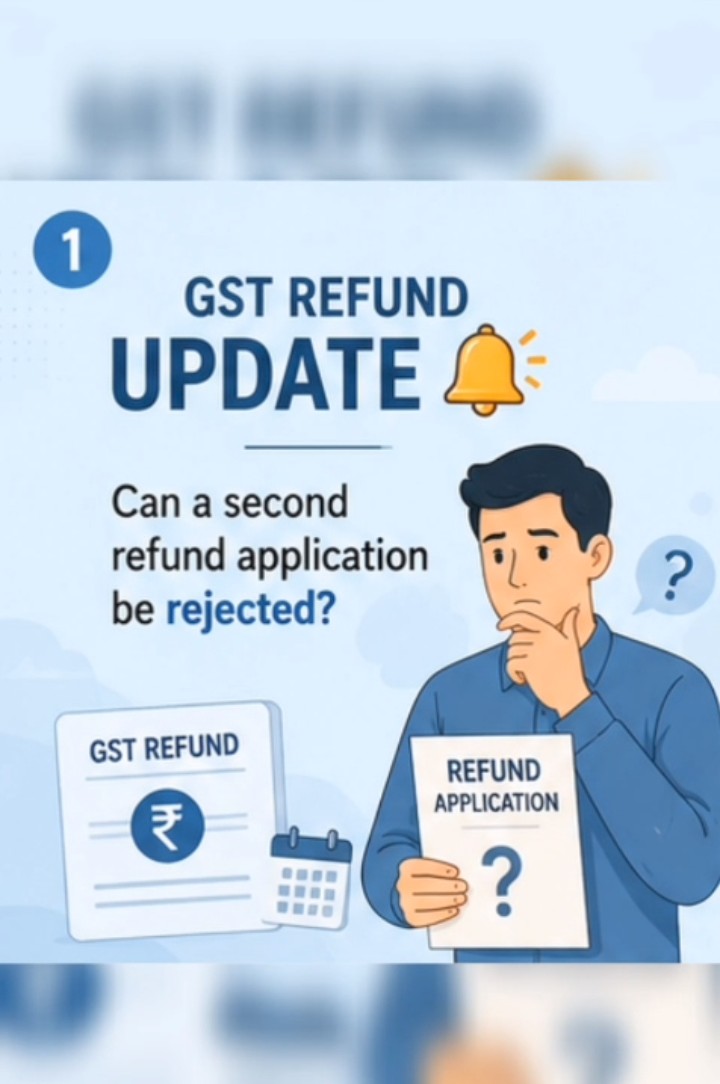
The Orissa High Court has delivered a significant ruling that is likely to influence GST refund administration across jurisdictions by holding that the Revenue cannot refuse or defer a taxpayer's refund merely because it is contemplating filing an appeal against an appellate order. In M/s Rashmi Agency v. Deputy Commissioner CT & GST (W.P.(C) No. 17470 of 2026, decided on 25 June 2026), the Court emphatically ruled that the possibility of a future appeal is no substitute for the statutory conditions prescribed under Section 54(11) of the Central Goods and Services Tax Act, 2017.
Background: Refund Denied Despite Favourable Appellate Order
The dispute arose after the taxpayer deposited ₹33 lakh during a DGGI investigation. The First Appellate Authority subsequently found that the amount had been deposited under an incorrect GST registration and further observed that the collection itself was contrary to the CBIC's investigation instructions. Consequently, the appellate authority allowed the appeal in full and held that the excess amount was liable to be refunded in accordance with law.
Despite the appellate order, the refund application was not processed. Instead, the Deputy Commissioner refused to consider it on the ground that the State still had six months to file an appeal before the GST Appellate Tribunal under Section 112 of the Act and, therefore, the appellate order had not attained finality.
Section 54(11): A Narrow Exception, Not a Blanket Power
Rejecting the Department's approach, the High Court undertook a textual interpretation of Section 54(11) and Rule 92(2) of the CGST Rules. The Court held that refund can be withheld only when the order giving rise to the refund is already the subject matter of an appeal or any other pending proceeding under the GST law, and the Commissioner records a reasoned opinion that release of the refund is likely to adversely affect the interests of the Revenue on account of fraud or malfeasance.
The judgment makes it abundantly clear that these statutory requirements are cumulative. A mere possibility that the Department may prefer an appeal in future does not satisfy the legislative threshold.
Equally significant is the Court's emphasis that Rule 92(2) and Form GST RFD-07 are not procedural formalities. The statute mandates a reasoned order recording the grounds for withholding the refund. Simply referring to Section 54(11), without demonstrating the existence of jurisdictional facts, does not confer the authority to deny a refund.
Appellate Orders Cannot Be Kept in Abeyance by Administrative Decisions
One of the most notable aspects of the ruling is its reaffirmation of judicial discipline. The Court observed that a subordinate authority cannot refuse to implement an appellate order merely because the Department is considering further litigation. Unless the appellate order is stayed, modified or reversed by a competent forum, it remains binding upon all authorities under the GST hierarchy.
In fact, the Court noted that when the refund application was rejected, no appeal had even been filed before the GST Appellate Tribunal. The Department instituted its appeal only after the writ petition was filed before the High Court. Consequently, the very foundation for invoking Section 54(11) was absent on the date the refund was refused.
Judicial Consensus Continues to Evolve
The decision also aligns seamlessly with recent Delhi High Court rulings in Truth Fashion (CONT. CAS(C) 484/2025 decided on 04 May 2026), Shalender Kumar (W. P. (C) 3824/2025 decided on 03 April 2025), Alex Tour & Travel (W. P. (C) 5722/2023 decided on 08 May 2023), and .GS. Industries (W. P. (C) 14719/2022 decided on 28 March 2023), all of which have consistently held that a departmental proposal to file an appeal cannot justify withholding refunds arising from an operative appellate order. Unless an appeal is actually pending and the statutory conditions are fulfilled, refund cannot be denied merely because the Revenue disagrees with the appellate decision.
With this judgment, another High Court has endorsed the same principle, lending greater judicial certainty to taxpayers facing prolonged refund delays.
Why This Ruling Matters
The judgment has implications extending well beyond the facts of the present case.
Across several States, taxpayers frequently encounter situations where refund claims remain pending for months solely because the Department is "examining" whether to challenge an appellate order. This practice effectively converts the statutory limitation period available for filing departmental appeals into an automatic embargo on refunds, a consequence that finds no support in the GST legislation.
The Court has now clarified that Section 54(11) is an exceptional power that must be exercised strictly within its statutory boundaries. Administrative apprehensions regarding possible recovery in future cannot replace the jurisdictional prerequisites expressly prescribed by Parliament.
The ruling also reinforces an equally important administrative principle: authorities exercising quasi-judicial functions must faithfully implement appellate orders instead of informally keeping them in abeyance until the Department decides its future litigation strategy.
Conclusion
The Orissa High Court has delivered a timely reminder that statutory rights cannot be eclipsed by administrative uncertainty. An appellate order continues to remain operative unless displaced by a superior judicial forum, and taxpayers cannot be denied the fruits of such an order merely because the Department may decide to challenge it in future.
In an era where timely grant of refunds remains one of the cornerstones of GST compliance, this judgment is likely to become an important precedent against the increasingly common practice of withholding refunds based solely on contemplated appeals. It restores the balance intended by the GST framework by ensuring that Section 54(11) remains an exception rather than a routine administrative tool for delaying legitimate refunds.