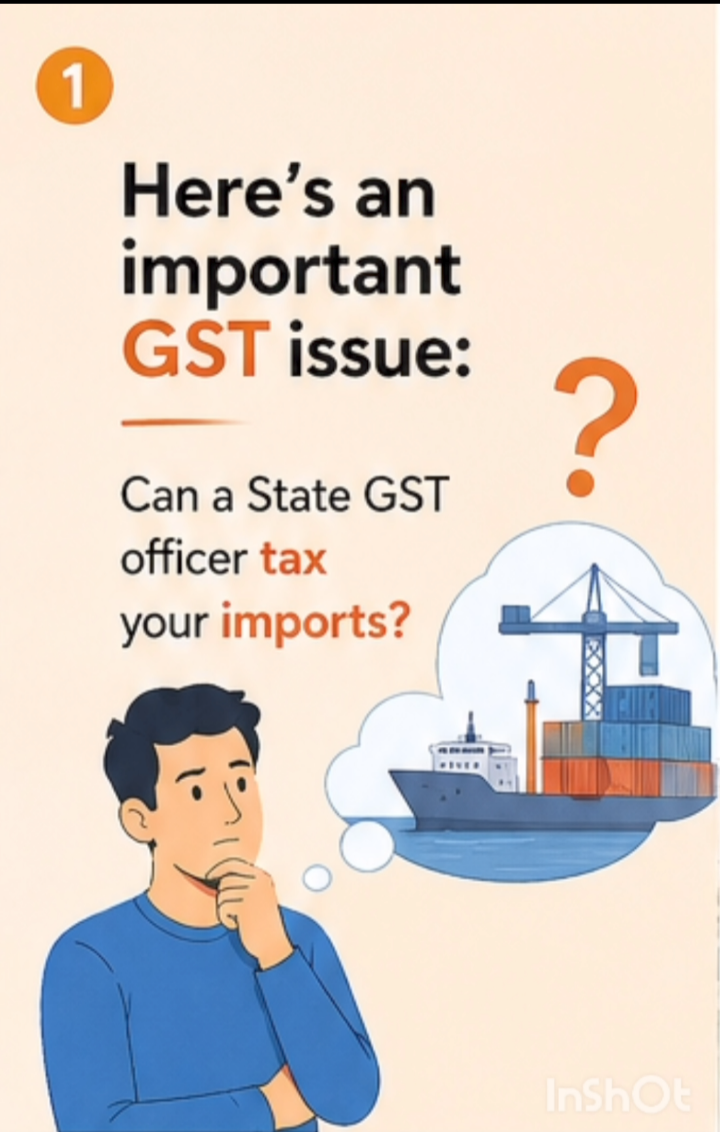
The Gujarat High Court ruled that State GST officers are empowered to exercise powers under the IGST Act without needing a separate notification from the Central Government. This decision came in response to a petition by M/s Jai Ganesh Enterprise, a GST-registered dealer whose consignment of pan masala and tobacco was detained despite having valid e-invoices and e-way bills. The authorities issued a confiscation notice under Section 130 of the CGST Act, claiming the documents had been previously used, and demanded ₹88.68 lakh through Form GST DRC-07.
Read more: GSTAT - No additional GST pre-deposit for GSTAT Appeal is needed when the earlier appeal deposit exceeds 10% of the reduced disputed tax demand [Order attached]
The petitioner argued that State GST officers lacked authority under the IGST Act without a specific Central notification and claimed no effective appellate remedy was available. However, the Court clarified that Section 4 of the IGST Act allows State GST officers to act as proper officers under the IGST Act, with no separate notification required unless specific exceptions or conditions are set by the Central Government. The Court noted that the State Tax Commissioner of Gujarat had already specified the jurisdiction and functions of these officers.
The Court, referencing decisions from other High Courts, concluded that the GST laws' cross-empowerment scheme is comprehensive, and the lack of a Central notification does not invalidate State GST officers' actions under the IGST Act. The Court also determined that the petitioner had an available remedy through the appellate authority under Section 107 of the GGST Act, leading to the dismissal of the writ petition due to the availability of an alternative statutory remedy.
Order Date - 13 July 2026
Parties: M/s Jai Ganesh Enterprise Vs Union of India & Others
Facts -
- Petitioner, M/s Jai Ganesh Enterprise, a registered GST dealer, purchased pan masala and tobacco from another registered dealer. While the goods were in transit, the vehicle was intercepted, and the driver produced valid e-invoices and e-way bills. Physical verification revealed no mismatch in the quantity of goods.
- Despite finding no discrepancy in the goods, the authorities detained the consignment alleging that the accompanying documents had been used on an earlier occasion. A confiscation notice under Section 130 of the CGST Act read with the IGST Act was subsequently issued.
- The authorities passed a confiscation order in Form GST MOV-11 and confirmed a demand of ₹88.68 lakh through Form GST DRC-07 in lieu of confiscation of the goods and conveyance.
- The petitioner approached the High Court contending that State GST officers lacked authority to pass orders under the IGST Act without a specific Central Government notification and that no effective appellate remedy was available under the GST laws.
Issue -
- Whether State GST officers can exercise powers under the IGST Act without a separate Central Government notification under Section 4 of the IGST Act, and whether an appeal against such orders is maintainable under the GGST Act.
Order -
- The Court observed that Section 4 of the IGST Act itself authorises officers appointed under the State GST Act to function as proper officers under the IGST Act. A separate notification is necessary only if the Central Government intends to prescribe specific exceptions or conditions, not for conferring the basic authority itself.
- The Court noted that the Commissioner of State Tax, Gujarat had already issued an order specifying the jurisdiction and functions of proper officers. Therefore, State GST officers were legally empowered to exercise powers under Sections 129 and 130 in relation to IGST matters.
- Relying on decisions of the Punjab & Haryana, Calcutta and Madhya Pradesh High Courts, the Court held that the scheme of cross-empowerment under the GST laws is complete in itself. The absence of an additional Central notification does not invalidate the actions of State GST officers under the IGST Act.
- The Court further held that the petitioner was not left without a remedy. Since the impugned orders were passed by State GST officers, the proper appellate remedy lies before the appellate authority under Section 107 of the GGST Act. Accordingly, the writ petition was dismissed on the ground of availability of an alternate statutory remedy.